Best Jobs in the UK for Foreign Workers: Career Opportunities and Requirements
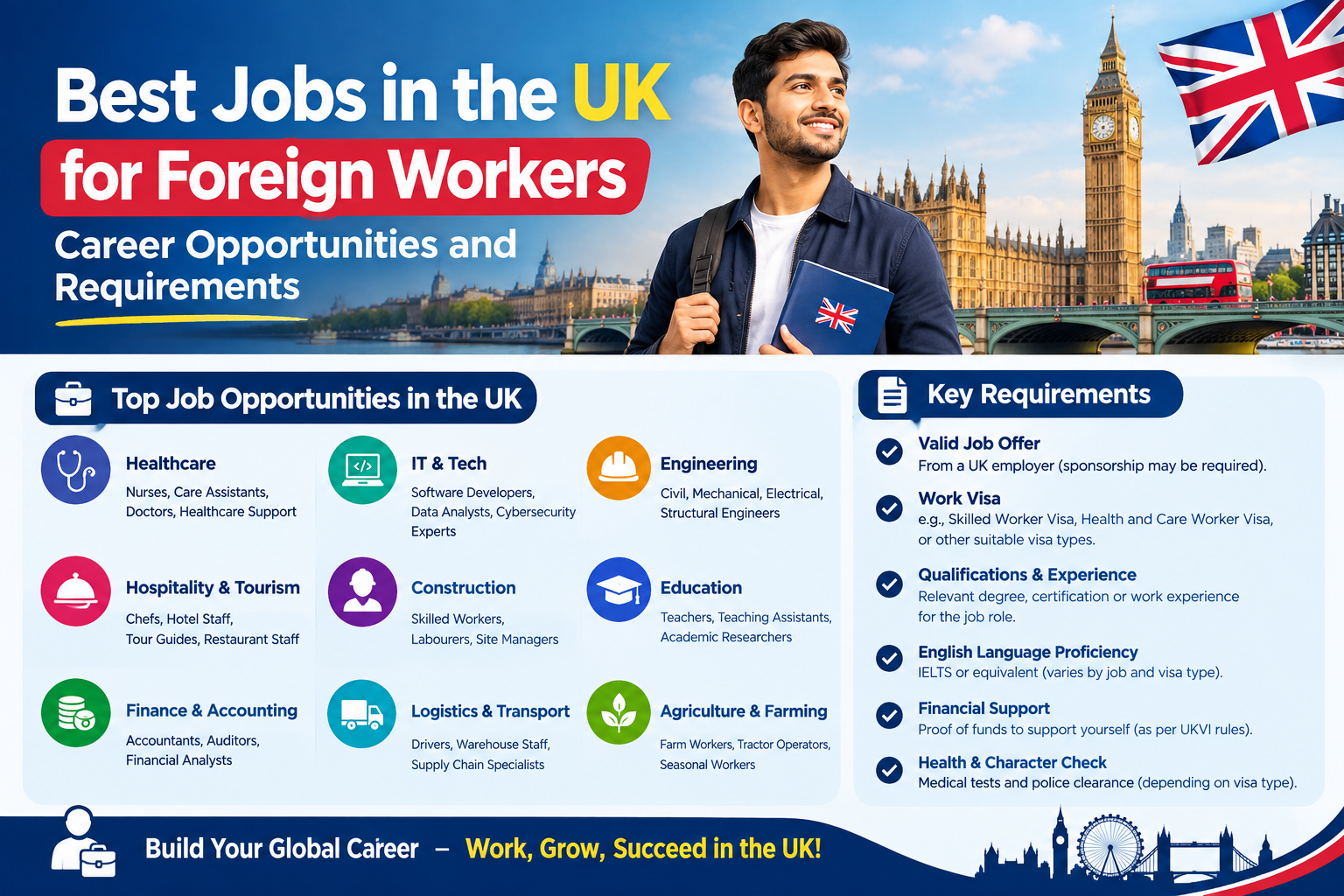
Best Jobs in the UK for Foreign Workers: Career Opportunities and Requirements

The United Kingdom continues to attract professionals and skilled workers from around the world. Its employment market covers technology, healthcare, engineering, finance, construction, education, logistics, scientific research, hospitality, and many other industries. For people living outside the UK, however, finding a suitable job involves more than searching for vacancies and sending applications. International candidates need … Read more
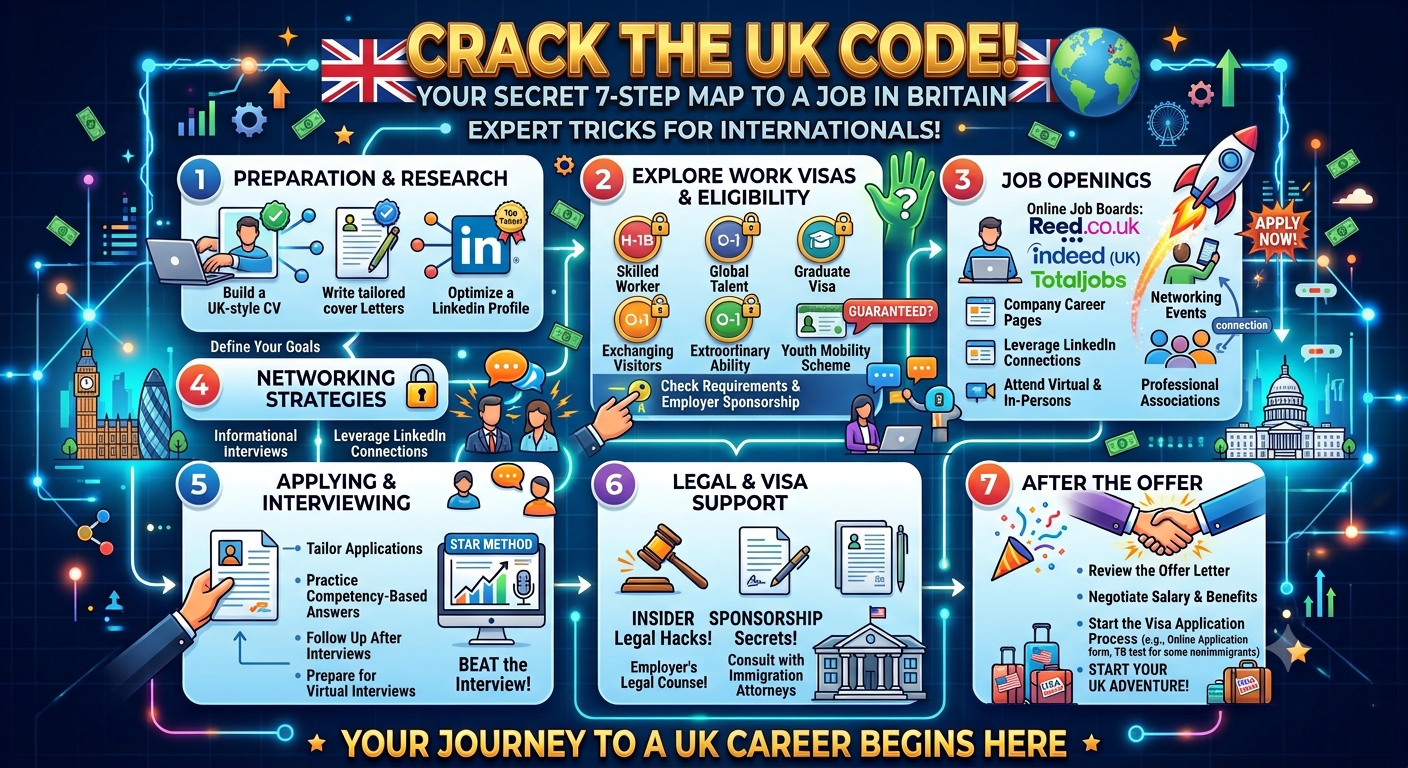
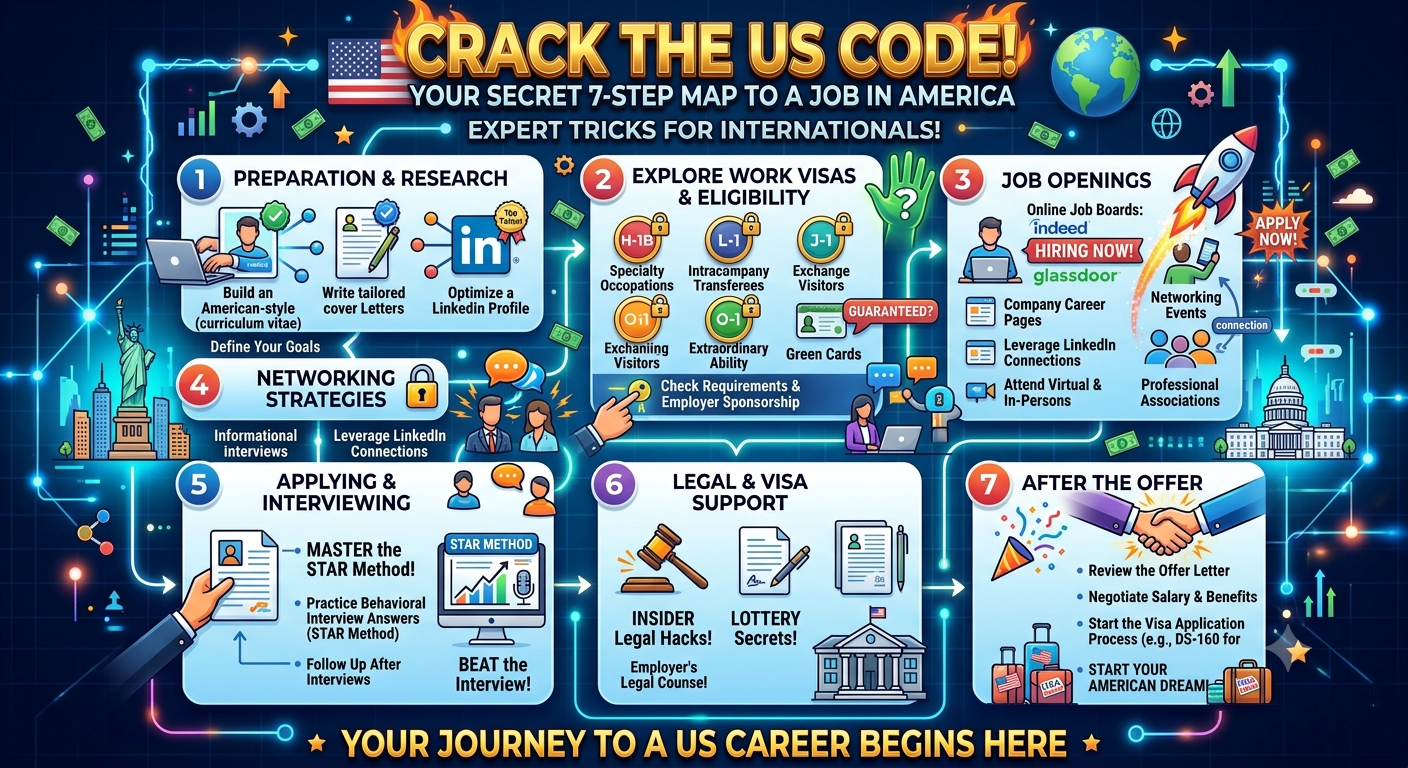
Best Jobs in the USA for Foreign Workers: Requirements, Skills and Career Options

Best Jobs in the USA for Foreign Workers: Requirements, Skills and Career Options

The United States remains an important destination for professionals and skilled workers from around the world. Its employment market covers a wide range of industries, from technology and healthcare to engineering, construction, logistics, finance, education, and hospitality. For foreign workers, however, finding employment in the USA involves more than identifying a vacancy and submitting a … Read more

How to Find Jobs in the USA: A Complete Guide for International Job Seekers

How to Find Jobs in the USA: A Complete Guide for International Job Seekers in 2026 Finding a job in the United States can be an exciting opportunity for international professionals, skilled workers, recent graduates, and people looking to build an international career. The U.S. has a large and diverse employment market covering technology, healthcare, engineering, construction, finance, logistics, hospitality, education, manufacturing, and many other industries. However, finding **jobs in the USA** from another country is different from simply searching for vacancies online. International job seekers need to understand how the U.S. job market works, which positions match their qualifications, how applications are prepared, and whether they have the legal authorization required to work. This guide explains the process step by step and provides practical information that can help international candidates organize their U.S. job search in 2026. ## Understanding the U.S. Job Market The United States has one of the world's largest employment markets. Job opportunities vary considerably depending on location, industry, experience, education, and professional skills. Major employment sectors include: * Technology and software development * Healthcare and medical services * Engineering * Construction and skilled trades * Finance and accounting * Transportation and logistics * Manufacturing * Education * Hospitality and tourism * Retail and customer service * Business and professional services * Scientific and technical occupations Instead of searching for every available position, international applicants should first identify the occupation that matches their education, experience, skills, and long-term career goals. For example, a software developer may focus on technology companies, while an experienced electrician may concentrate on construction, maintenance, manufacturing, or facilities-related employers. ## Step 1: Identify the Right Type of Job Before applying, create a list of positions that match your background. Consider these questions: * What qualifications do I have? * How many years of experience do I have? * Which skills can I demonstrate? * Does my profession require a license? * Are my qualifications recognized or transferable? * Am I looking for entry-level, mid-level, or senior positions? * Can the position be performed remotely? * Does the employer normally hire international candidates? This step can save considerable time because many U.S. vacancies have specific educational, technical, licensing, or experience requirements. ### Entry-Level Jobs People without extensive professional experience can look for entry-level opportunities in areas such as administration, customer support, hospitality, logistics, sales, technology support, and certain manufacturing roles. However, entry-level does not always mean that no qualifications are required. Employers may still look for communication skills, computer knowledge, certifications, relevant education, or previous work experience. ### Skilled and Professional Jobs Experienced candidates can search for positions related directly to their occupation. Examples include: * Software developer * Data analyst * Registered nurse * Civil engineer * Mechanical engineer * Accountant * Project manager * Electrician * HVAC technician * Construction supervisor * Truck driver * Healthcare technician The requirements vary significantly between occupations. ## Step 2: Prepare a U.S.-Style Resume Your resume is one of the most important parts of a U.S. job application. A strong resume should make it easy for a recruiter to understand your experience quickly. Generally, include: * Full name * Professional contact information * Professional summary * Relevant skills * Employment history * Education * Certifications * Relevant projects * Technical skills, where applicable Avoid adding unnecessary personal information. In many U.S. professional applications, information such as age, marital status, religion, or a photograph is generally not necessary unless specifically requested. ### Focus on Achievements Instead of only listing responsibilities, explain measurable achievements when possible. For example, rather than writing: > Responsible for managing customer accounts. A stronger description might explain the scale or result of the work, such as managing a particular number of accounts, improving response times, or supporting customer retention. The exact achievement should always be truthful and based on your actual experience. ## Step 3: Search for Jobs Through Reliable Sources International candidates should use multiple job-search channels rather than depending on a single website. Useful sources include employer career pages, professional networking platforms, established job boards, recruitment companies, and industry-specific employment websites. When searching online, use specific combinations of keywords. For example: **Profession + location** “Software Developer Jobs in Texas” **Profession + experience** “Entry Level Data Analyst Jobs” **Profession + work authorization** “Software Engineer Sponsorship” **Industry + location** “Healthcare Jobs in California” Specific searches can produce more relevant results than simply searching for “jobs in USA.” ## Step 4: Research the Employer Before Applying Before submitting an application, research the company. Look for: * Official company website * Careers page * Company location * Industry * Job responsibilities * Required qualifications * Application process * Contact information * Company reputation and publicly available information Be particularly careful with job advertisements that promise unusually high earnings for little work or request money before an interview or hiring decision. A legitimate employer generally should not require an applicant to pay money simply to receive a job offer. ## Step 5: Understand Work Authorization This is one of the most important issues for international job seekers. Being qualified for a position does not automatically give someone permission to work in the United States. Work authorization depends on the individual's circumstances and the applicable U.S. immigration category. Some international workers may require an employer-sponsored employment visa or another form of authorization. Others may already have authorization through their immigration status. Because immigration rules and procedures can change, applicants should verify current information through official U.S. government sources rather than relying solely on social media posts, old articles, or recruitment advertisements. When a job advertisement mentions sponsorship, read the employer's requirements carefully. “Visa sponsorship available” does not necessarily mean that every international applicant will qualify. ## Step 6: Look for Employers Open to International Candidates Not every employer recruits internationally. If you need employer sponsorship, searching specifically for employers and positions that have experience hiring international workers can make your search more targeted. Useful search phrases can include: * Jobs with sponsorship * Employer sponsorship jobs * International applicants jobs * Skilled worker opportunities * Global recruitment * International talent However, always verify the actual sponsorship policy with the employer. A job advertisement mentioning international recruitment does not necessarily guarantee sponsorship for a particular applicant. ## Step 7: Build a Professional Online Presence A professional online profile can help recruiters understand your background before contacting you. Keep your professional information consistent across your resume and professional networking profiles. Your profile can include: * Professional headline * Summary * Work experience * Education * Certifications * Skills * Projects * Portfolio links For technology, design, writing, engineering, research, and other portfolio-based careers, showing relevant work can make it easier for employers to evaluate your capabilities. ## Step 8: Prepare for U.S. Job Interviews Interview formats vary by company and position. You may encounter: * Phone interviews * Video interviews * Technical interviews * Behavioral interviews * Panel interviews * Practical assessments * Multiple interview rounds Common questions may include: * Tell me about yourself. * Why are you interested in this position? * What experience do you have with this type of work? * What are your strongest professional skills? * Describe a difficult problem you solved. * Why do you want to work for this company? * What are your career goals? Prepare specific examples from your previous experience. A useful approach is to explain the situation, what you were responsible for, what action you took, and what result followed. ## Step 9: Understand Salary Information Salary is an important part of evaluating a job, but international candidates should look beyond the headline salary. Compensation may include: * Base salary * Bonuses * Overtime * Commission * Health benefits * Retirement benefits * Paid leave * Other employer benefits The advertised salary can also vary significantly depending on location and experience. For example, a particular occupation may have very different compensation levels in major metropolitan areas compared with smaller cities. When researching salary, compare information from reliable sources and check whether figures represent annual salary, hourly pay, base compensation, or total compensation. ## Step 10: Consider the Location The United States is geographically large, and employment conditions differ considerably between states and cities. Before accepting an opportunity, research: * Housing costs * Transportation * Local taxes * Healthcare expenses * Typical salary levels * Weather * Industry concentration * Distance from major cities * Availability of public transportation A higher salary does not necessarily mean a higher standard of living if living costs are also substantially higher. ## Jobs in the USA for Different Experience Levels ### For Recent Graduates Recent graduates can explore internships, graduate roles, junior positions, trainee opportunities, and entry-level jobs. Relevant skills, projects, internships, certifications, and academic work can strengthen an application when professional experience is limited. ### For Experienced Professionals Experienced candidates should highlight specific accomplishments rather than simply listing job duties. Leadership experience, specialized technical skills, industry certifications, project management, and measurable results can all be relevant. ### For Skilled Workers Skilled trades can include areas such as electrical work, plumbing, welding, HVAC, construction, equipment maintenance, and other technical occupations. Some occupations may have state-specific licensing or certification requirements, so candidates should investigate those requirements before planning employment. ## Common Mistakes International Job Seekers Should Avoid ### Applying to Every Job Sending hundreds of unrelated applications can be less effective than applying selectively to positions that genuinely match your qualifications. ### Using the Same Resume Everywhere Different positions emphasize different skills. Adjust your resume so that relevant experience is easy to identify. ### Ignoring Work Authorization Always understand whether you are legally authorized to work for the position and whether additional authorization may be required. ### Paying for a Job Offer Be cautious about anyone asking for money in exchange for a guaranteed job, interview, or employment offer. ### Trusting Unverified Recruitment Messages Verify employers through official websites and independently confirm contact details. ### Exaggerating Qualifications Never claim certifications, experience, education, or skills that you do not actually possess. Background checks and professional verification can expose inaccurate information. ## How Long Does It Take to Find a Job in the USA? There is no fixed timeline. The process can depend on: * Your occupation * Experience * Education * Location * Number of suitable vacancies * Employer hiring process * Interview performance * Work authorization * Industry conditions International applicants may also have additional steps compared with candidates who already have unrestricted work authorization. Instead of focusing on a specific number of days, create a consistent job-search routine. For example, you could: 1. Identify suitable vacancies. 2. Research each employer. 3. Customize your resume. 4. Submit applications. 5. Track applications. 6. Follow up when appropriate. 7. Prepare for interviews. 8. Continue improving relevant skills. ## How to Organize Your Job Search Create a simple application tracker containing: | Information | Example | | ---------------- | --------------------------- | | Company | Employer name | | Position | Job title | | Location | City and state | | Application Date | Date submitted | | Job Link | Original vacancy | | Status | Applied/Interview/Closed | | Contact | Recruiter or hiring contact | | Notes | Important requirements | This prevents you from losing track of applications and makes your search more organized. ## Frequently Asked Questions ### Can foreigners get jobs in the USA? Yes, international workers can work in the United States when they meet the requirements for the relevant employment authorization or immigration category. The exact requirements depend on the individual's circumstances and the type of employment. ### Can I find a U.S. job while living outside the USA? Yes, international candidates can search and apply for U.S. vacancies from outside the country. However, whether an employer can hire you depends on the position, your qualifications, and your ability to obtain or already hold the necessary work authorization. ### Which industries hire international workers? International recruitment varies by employer and occupation. Technology, healthcare, engineering, research, specialized professional services, and certain skilled occupations may have opportunities for qualified international candidates, but requirements differ substantially. ### Do all U.S. jobs provide visa sponsorship? No. Many positions do not provide sponsorship. Candidates who require sponsorship should carefully examine the employer's stated requirements and confirm the policy when necessary. ### Is a U.S. resume different from a resume used in other countries? Resume conventions can differ between countries. A U.S.-focused resume generally emphasizes relevant professional experience, skills, education, and achievements while avoiding unnecessary personal information. ## Final Thoughts Finding **jobs in the USA** as an international candidate requires more than simply submitting applications online. A successful search starts with identifying suitable occupations, preparing a professional resume, researching employers, understanding work authorization, and applying selectively to relevant positions. The U.S. employment market contains opportunities across many industries, but the right opportunity depends on your qualifications, experience, location preferences, career goals, and legal ability to work. For 2026 and beyond, international job seekers should focus on building skills that employers actually need, maintaining accurate professional profiles, researching companies carefully, and verifying employment and immigration information through reliable sources. Most importantly, treat your job search as a structured process rather than a numbers game. A targeted application supported by relevant skills and a clear professional profile can provide a much stronger foundation than sending the same resume to every vacancy.

Finding a job in the United States can be an exciting opportunity for international professionals, skilled workers, recent graduates, and people looking to build an international career. The U.S. has a large and diverse employment market covering technology, healthcare, engineering, construction, finance, logistics, hospitality, education, manufacturing, and many other industries. However, finding jobs in the … Read more